We use cookies on our website to enhance your browsing experience and improve our services. By clicking “Accept” you consent to our use of cookies.

The story of
MASUNAGA
It began to save the hometown, and today it is praised around the world.
It all started with stepping up to eyewear manufacturing to save the economy of the hometown with heavy snowfall.
In 1871, Gozaemon Masunaga was born in Asouzu (now Syouno town, Fukui city) as the first son of Masunaga family who was well known as wealthy farmer. After succeeding to the family headship in 1887, he got married at age 25 and build a happy home. He was a steadfast and steady man who built strong trust with the villagers and was always concerned about the village’s economy. Back then, people in Fukui struggled with thier poor living condition due to heavy snow in winter, limited farm fields, and no distinctive local specialties.
He thought that if there were a solid industry in the village, the quality of life would improve and there would be no need to seek work elsewhere. At that very moment, his brother Kohachi suggested to start making eyewear. He said, “in deserted village like Asouzu, people cannot rely solely on agriculture for their livelihood. In winter, people can make eyeglasses as a side job. As they gain skills, they can shift to making eyeglasses as their main occupation. If children learn this skill, there will be many places in Osaka willing to take them on. With the spread of the education in Japan, more people will start reading, leading to higher demand for eyeglasses. Let’s give it a try.” However, Gozaemon was reluctant to do so since the eyewear industry was not very common at that time. Still, Kohachi’s eager persuasion helped turn it into reality.
That was in late 1904.
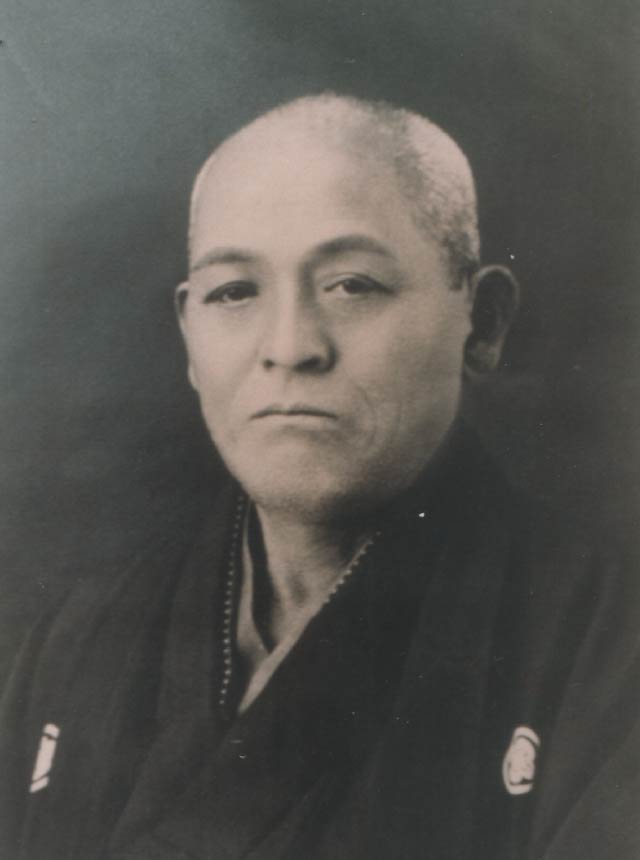 Founder : Gozaemon Masunaga
On June 1, 1905, the Masunaga’s first generation of craftsmen were formed. The beginning of eyewear industry in Fukui.
1905 was a very good economic year in Japan because of the Japanese army’s victory in Russo-Japanese War. Gozaemon convinced Suekichi Masunaga, a skilled carpenter in the village, and took him to Osaka to let him learn the process of making eyeglasses under the instruction of Yohachi Yoneda. At the same time, Gozaemon was considering bringing Yohachi to Fukui to officially start eyewear manufacturing there. At that time, eyewear manufacture in Fukui had not yet earned trust, so it took time to convince Yohachi and his craftsmen to come. However, after patiently convincing Yohachi, he, his wife and his apprentice finally came to Fukui. Craftsmen from the village gathered around and formed the Masunaga’s first generation of craftsmen. On June 1, 1905, eyewear manufacturing in Fukui officially began. They needed to gain further skills and knowledge from experienced craftsmen to make better products and discover new markets. Therefore, they brought Matsutaro Toyoshima, a man known as a master craftsman in Tokyo. Tokyo was an advanced area of eyewear manufacturing. There, division of production had already established, and research on plating, the production of iron materials as an alternative to copper, and prototyping of celluloid eyeglass frames were already underway around 1907. Matsutaro honed his skills in that environment, and thanks to him, the eyewear manufacturing in Fukui made significant progress.
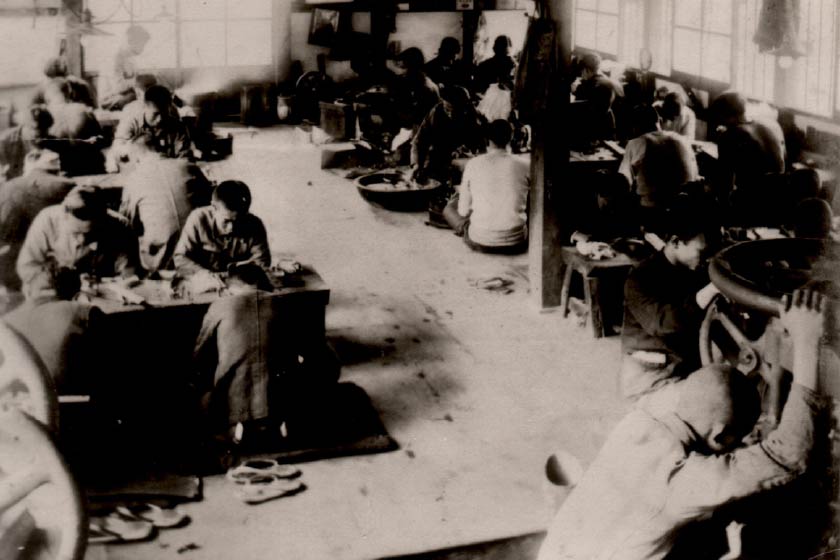 Work scene in Meiji era
Craftsmen honed their skills under a guild-like cooperative system, which dramatically improved the quality.
Eyewear manufacturing in Fukui was not all smooth sailing. There were many issues to address, such as how to arrange funds for materials and other supplies, how to sell the products, and more. Gozaemon and Kohachi spent many sleepless nights puzzling over how to achieve high quality to meet customer demands. In fact, even after they made frames, they did not meet customers’ standards and were asked to remake them. Even though they expanded their factory and produced more frames, sales did not increase as expected, and eventually they ran out of funds. To resolve this situation and boost sales, the craftsmen needed to make additional efforts.
A major factor in improving quality was the guild-like cooperative system that was implemented form the beginning. Masunaga’s first generation of craftsmen were assigned as managers, formed teams and apprentices under them. Gozaemon, the leader, placed order to each manager and took responsibility for all the finished products. The craftsmen were filled with pure passion to make better frames and to create something new with their hands. Fueled by this passion, they competed against teams and horned their skills. The guild-like system boosted up their motivation and significantly improved the quality of eyeglasses made in Fukui.
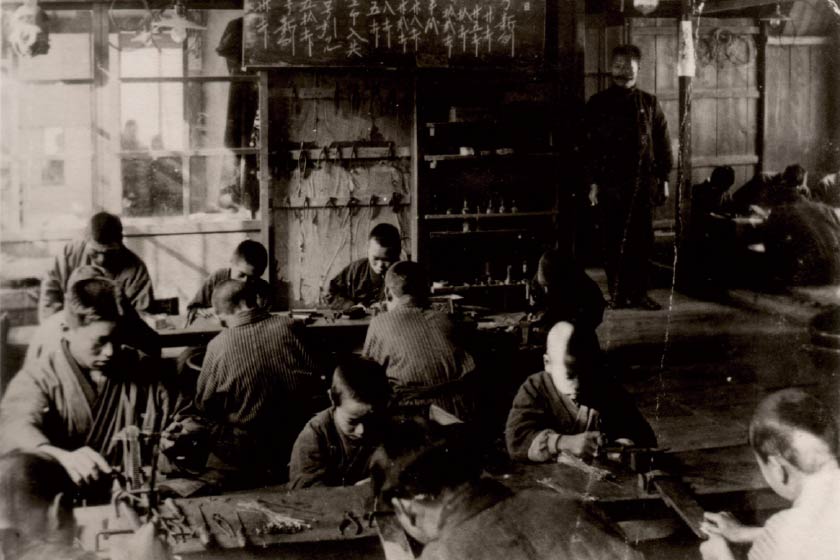 Work scene in Meiji era
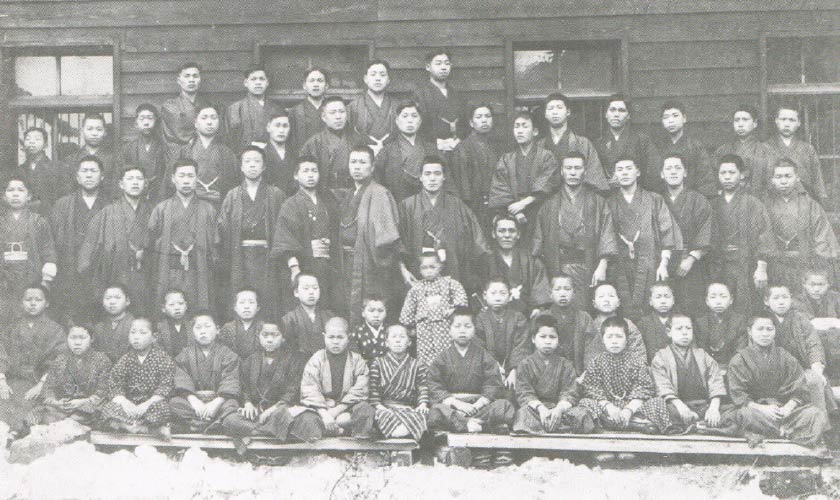 Gozaemon and workers
The eyeglasses from Masunaga Optical were recognized throughout Japan and became the foundation for making Fukui a world-class manufacturing region.
In 1911, 13 eyewear manufacturing factories were established around Fukui. In August, the gold/copper frames exhibited to national products exhibition under the name of Gozaemon won first-class gold prize. Eyewear Manufacturing began in 1905 and 6 years later, eyewear made in Fukui finally recognized by the public. Today, 97% of Japanese-made optical frames are manufactured in Fukui. There is no doubt that Masunaga Optical was the foundation of this achievement.
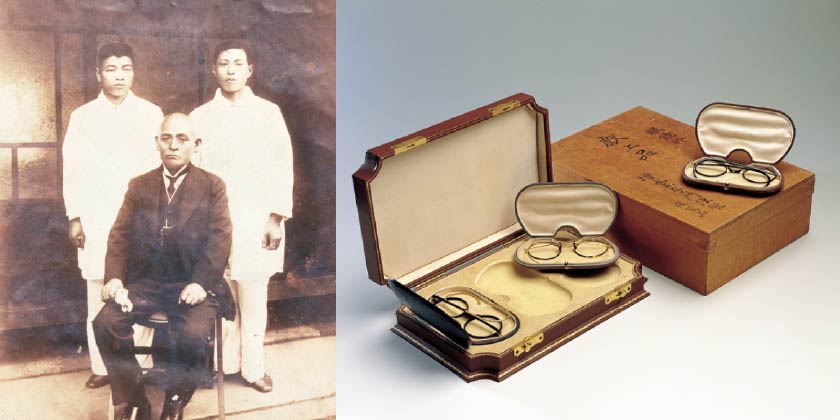 Moreover, in 1933, three frames were presented to the emperor of Japan. The eyeglasses, made with great care by two craftsmen, still retain their beauty and splendor.
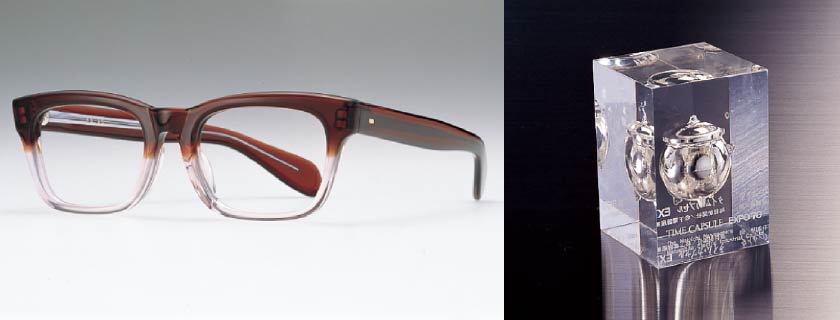 In 1960s, Our original brands achieved stable position in Japan. In 1970, “Custom 72” was placed in the time capsule at the Osaka World Expo.
We continue to develop new designs to meet new needs, but we guarantee one thing will remain constant—Masunaga quality.
At the heart of the company lies a simple yet enduring mission statement :
“We manufacture excellent eyeglasses.
We want to make a profit if we can, but we don’t hesitate to take a loss.
It is always in our thoughts to manufacture excellent eyeglasses.”
More than a century ago, Gozaemon Masunaga began making eyewear in his snowy hometown, determined to build a sustainable local industry.
By introducing a collaborative workshop system, he created a culture of shared skill and relentless pursuit of quality — a spirit of craftsmanship that continues to define both Masunaga and Fukui’s world-renowned eyewear industry today.